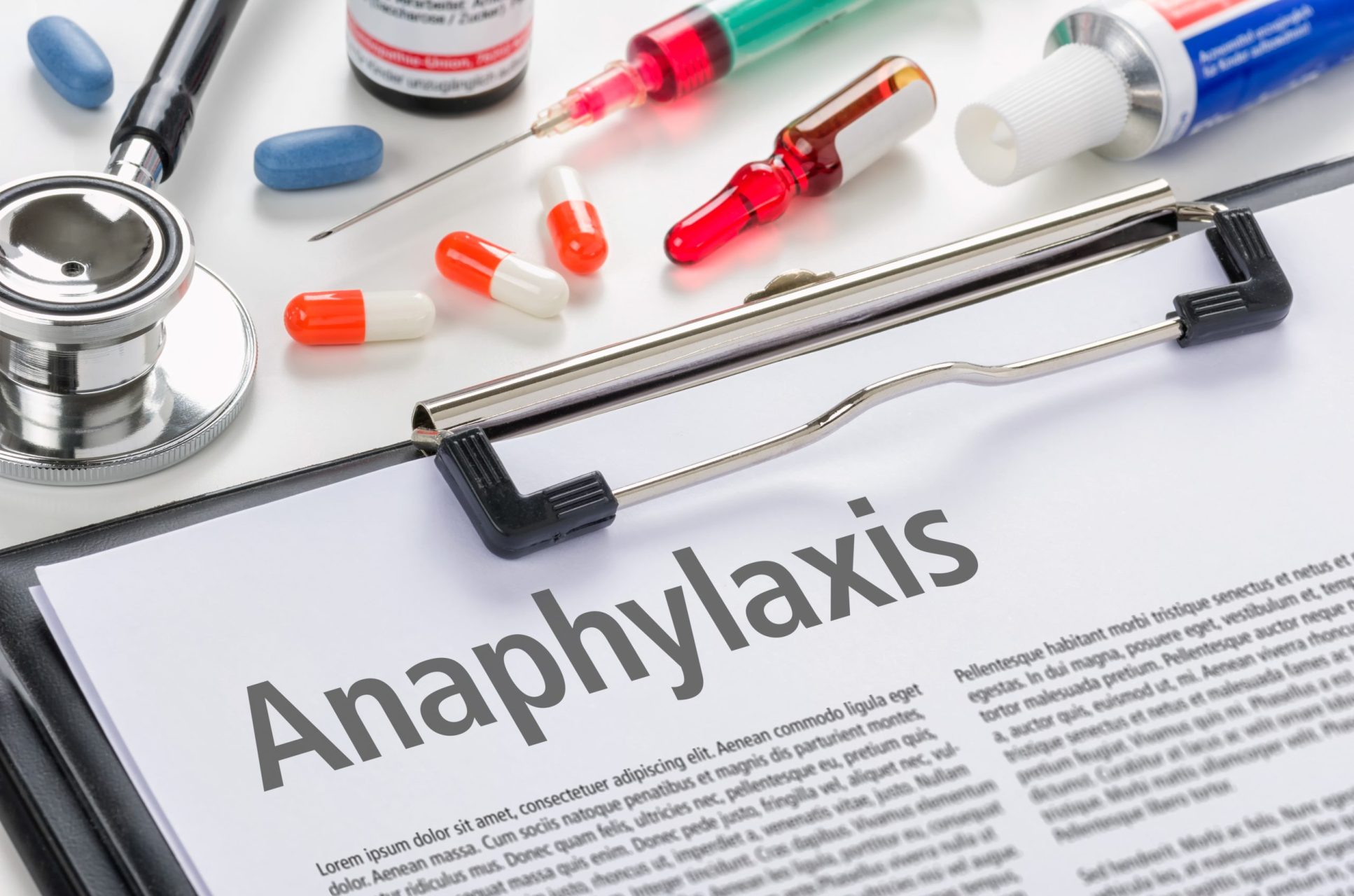
What is Anaphylaxis Shock – An Allergic Reaction?
This article discusses allergens and allergen labelling, as well as Anaphylaxis Shock, which is more commonly referred to as an Allergic Reaction.
Around 6% of the UK adult population have a food allergy.
In the UK, it is estimated that 220,000 people up to the age of 44 have had a nut-induced anaphylactic reaction.
Anaphylaxis is a life-threatening allergic reaction that happens very quickly. It can be caused by food, medicine or insect stings.
This article will discuss Anaphylaxis shock – an allergic reaction to food containing food allergens.
Do Food Handlers Recieve Training About Food Allergens?
The Food Standards Agency states:
”
Food businesses must ensure their staff receive training on Allergens.
How Can the Risk of Having an Anaphylaxis-Allergenic Reaction be Reduced?
Anyone who suffers from Allergic reactions towards food containing allergens can help reduce the risk of anaphylaxis – an allergenic response.
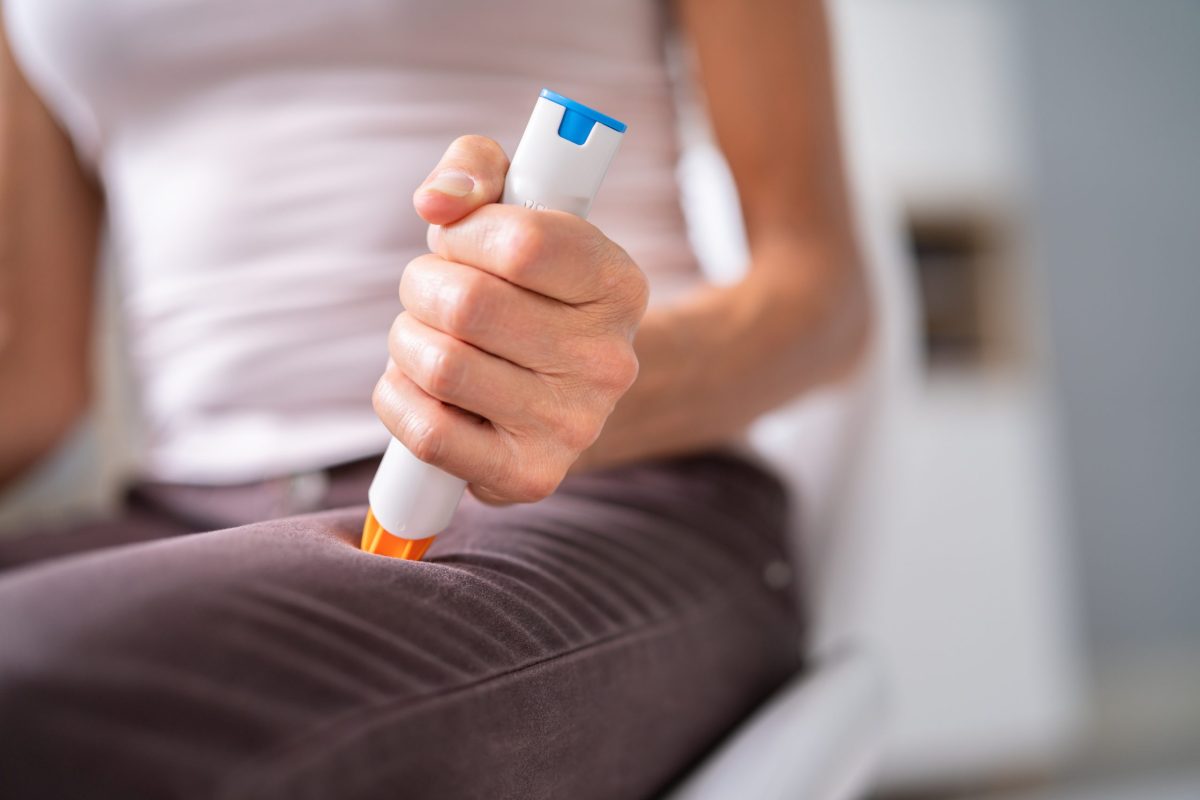
Anybody who has a severe food allergy should carry an adrenaline auto-injector (AAI), such as an EpiPen, with them at all times. Even if the person with a food allergy doesn’t plan on eating, they should still carry the pen.
Not all allergic reactions happen immediately. If an Anaphylaxis shock or allergenic reaction occurs and the person with the allergy does not receive an adrenaline shot, it could be life-threatening.
For example,
- When visiting a restaurant, inform the first person greeting them about their allergy.
- Carry an adrenaline auto-injector (AAI) at all times. This is also known as an EpiPen. The EpiPen is used to treat the symptoms of the Anaphylaxis shock–Allergenic reaction
- Check the adrenaline auto-injector (AAI) expiry date regularly.
- The adrenaline auto-injector (AAI)(EpiPen) solution should be clear and colourless. If the solution becomes discoloured or particles appear, the EpiPen (AAI) should be replaced. Even if this is before the expiration date.
- Practise using an adrenaline auto-injector (AAI) EpiPen using a trainer injector (order a trainer injector here). The injector does not contain a needle or medicine. It can be obtained free online from EpiPen.
- Show friends, family, colleagues or carers how and when to use an adrenaline auto-injector.
- Use the adrenaline auto-injector even if the symptoms are mild, but you think you may have anaphylaxis.
- Wear medical alert jewellery such as a bracelet with information about any allergy – this
- Tell others about your allergy, particularly if you intend to eat with them in case of an emergency.
What are the Symptoms of an Anaphylaxis Reaction?
It is hazardous for someone with a severe allergy to be without an adrenaline injector (AAL) with them in case of an emergency.
Peanuts are one of the ‘significant 8′ allergens, alongside foods like milk, soy, and cereals containing gluten. These eight allergens account for the most common food allergies, not how dangerous they are. All allergies are hazardous, even if they are not as common.
SevereAnaphylaxis Symptoms
1. Feeling lightheaded or faint
2. Breathing difficulties, such as fast, shallow breathing
3. Swelling of the throat and mouth
4. Blue skin or lips
5. Confusion and anxiety
Moderate Anaphylaxis Shock Symptoms
include:
1. Feeling lightheaded or faint
2. Breathing difficulties, such as fast, shallow breathing
3. Swelling of the throat and mouth
4. Blue skin or lips
5. Confusion and anxiety
Key things to remember:
- If you suspect someone is having a severe Anaphylaxis Shock – allergic reaction, their EpiPen Adrenaline Auto-Injector (AAI) should be used WITHOUT DELAY.
- Lie the person flat with legs raised. If breathing is difficult, allow the person to sit with legs raised. Do not stand the person up!
- Call 999 for an ambulance and mention anaphylaxis (ana—fill—axis) to get medical help immediately.
- Always carry two AAIs with you. If symptoms do not improve within 5 minutes, you can safely place the second AAI on the other thigh.
- Check the expiry dates on each AAI. Epi-Pen offers a FREE expiry alert service, which allows you to receive reminders by text or email when your EpiPen is about to expire.
Order a Free Epipen Trainer
Epipen offers a free EpiPen to train people to use it.
A trainer device is a valuable tool for practising using an AAI. You can use this link to order an Epi-Pen trainer device today.
How is an Adrenaline Auto-Injector (AAI) Used?
Adrenaline auto-injectors (AAIs) are prescribed to people with allergies who are at risk of having a severe allergic reaction (anaphylaxis).
The EpiPen (Adrenaline auto-injector) is the first line of treatment.
Recognising the signs and symptoms of anaphylaxis and knowing what to do in an emergency is vital.
In the UK, two types of AAIs are available – Epi-Pen and Jext. EpiPen is commonly used and perhaps better known.
Both contain the same medication, adrenaline, which is injected. However, each device is given differently, so it is important to know how to use each Adrenaline Auto-Injector (AAI) device.
The EpiPen should be used by the person having the anaphylaxis shock–allergenic reaction or, if they cannot do so, by others nearby.
- Remove the Blue Safety Cap.
- Hold the EpiPen in your usual hand and remove the blue safety cap. To do this, pull straight up.
- Flip open the flip-top case. Remember: blue to the sky, orange to the thigh.
- Position the Orange-tip
- Hold the EpiPen at 90, approximately 10 cm away, with the orange tip pointing towards the outer thigh. This can be used through clothing.
- Jab The Orange Tip.
- Jab the EpiPen Orange Tip into the outer thigh at a right angle to the thigh. Hold firmly in place for 3 seconds before removing and safely discarding the EpiPen.
- Dial ‘999’ asking for an ambulance and say “anaphylaxis” anna-fill-axis).
- While waiting for the ambulance, lay the person down with their feet in the air. Unless this makes them breathless, sit them up—this should be for a short time.
- The EpiPen should be replaced after having been used.
EpiPen instructions (EpiPen website)
Is Anaphylaxis a Medical Emergency?
- Use the Adrenaline Auto-Injector (AAI) – EpiPen.
- Call ‘999’.
- After 3 seconds, remove the injector.
- Get the person to lie down.
- Use a 2nd injector (AAI) if there is no improvement in symptoms after five minutes.
What is the Treatment for Anaphylaxis
Anaphylaxis needs to be treated in hospital immediately.
Treatments can include:
- adrenaline given by an injection or drip in your vein
- oxygen
- fluids given by a drip in your vein
- usually staying in hospital for around 2 to 12 hours, possibly longer.
2 adrenaline auto-injectors will be given in case another anaphylactic reaction occurs.
An adrenaline auto-injector is for injecting adrenaline. Instructions will be given on how and when to use AAI.
Demonstration on how to use the adrenaline auto-injector (AAI).
Referred to an allergy specialist for tests and advice.
What Does the Food Allergy Labelling Information Really Mean?
Navigating the labels on food amongst the supermarket aisles can be a complex challenge.
Whilst anyone with a food allergy should have a list of foods to avoid, understanding product labels extends beyond a checklist:
What Does vegan mean?
Is food safe for my milk and egg-allergic child?
What does ‘may contain’ mean?
Is ‘free-from’ safe?
Navigating food labels can be challenging as laws and products continue to change.
What is The Law Concerning Food Allergens?
“UK law states that the 14 most common allergens must be highlighted in the ingredients list on a food label. These include celery, cereals containing gluten, crustaceans, eggs, fish, lupin, milk, molluscs, mustard, tree nuts, peanuts, sesame seeds, soya, and sulphur dioxide (sometimes known as sulphites). They should be highlighted in bold, CAPITAL LETTERS or underlined to alert the consumer that it contains an allergen.”
Are There Alternative Names for Food Connected with the 14 Allergens?
Sometimes, ingredients listed on food labels go by an alternative name, making it less apparent that they are linked to one of the top 14 allergens. These are referred to as hidden allergens; some examples include: Allergen Examples of hidden or unrecognisable terms Milk Whey, casein, lactoglobulin, lactalbumin Egg Ovalbumin, Lysozyme or E1105, lecithin or E322, Livetin Peanut Earthnut, monkey nuts, Chinese nuts, beer nuts These hidden allergens will still be clearly labelled with the allergen in brackets afterwards, e.g. whey powder (MILK). Hidden allergens can be found in the least likely places; for example, milk can be hidden in gravy, spice mixes, gnocchi, condiments and even crisps.
Are There Issues with Flavouring and Spices?
Food labels may also include generic terms such as ‘Flavourings’ or ‘Spices’. This is because individual ingredients only need to be named if they constitute more than 2% of the total ingredients.
For instance, paprika can be used as a flavouring, spice, or colouring but is exempt from being listed separately if it accounts for less than 2% of the food.
We know from our community that they can have allergies to chillies, garlic, tarragon and coriander, making it challenging to decipher food labels when only ‘Flavourings’ or ‘Spices’ are listed.
For example, if you have an allergy to garlic and see spices listed, we recommend that you do not take the risk and contact the manufacturer to ask if it contains garlic.
Understand how to read these, sometimes complex, labels.
What Does Vegan and ‘May Contain’ Labels Mean?
The surge in vegan products lining supermarket shelves may be a positive development for families with milk, egg, and fish allergies.
However, questions still arise: are these products indeed what they seem, and can they be deemed safe for individuals within the allergic community?
The Food Standards Agency (FSA) states:
“A vegan claim on a food product means that no ingredients of animal origin were intentionally used to make the product.
However, there is still a risk that foods of animal origin could be unintentionally present in foods marked as vegan. This is due to the potential of cross-contamination at some point in the food supply chain.”
Precautionary Allergen Labelling (PAL)
Commonly recognised as ‘may contain,’ differs from the mandatory labelling of the 14 allergens, as these (may contain) statements are voluntary and not regulated by law. Precautionary Allergen labelling (PAL) is due to the unintentional presence of a food allergen at any stage in the food chain, spanning from the farm to the final product on your plate.
The excessive use of ‘may contain’ blanket statements on products may mislead and frustrate consumers, sometimes causing unnecessary restriction and limited choice. There is no law to standardise when these statements should be used. Although there is a significant variation between products, snacks, and dry foods such as cereals, cereal bars, chocolate, biscuits, and nuts, there is generally a greater risk of cross-contamination with allergens.
The FSA emphasise that food manufacturers should only use Precautionary Allergen Labelling (PAL) after a thorough risk assessment. This assessment should identify a genuine risk of allergen cross-contact during the manufacturing process, which cannot be eliminated through careful risk management practices, like separating production lines and thorough cleaning. Another concern for those living with food allergies outside of the common 14 is that food manufacturers are very unlikely to declare if there is a risk of cross-contamination via a ‘may contain’ statement.
There are more than 20 alternative phrases for ‘may contain’. Interestingly, there is no difference in the associated risk. May contain… May contain traces of… Packed in an environment where…
The list goes on to include the following:
maybe present, made in a facility that also processes… produced in a factory that handles… produced on shared equipment that also processes… made on the same production line as… made in a production area that also uses… not suitable for allergy sufferers… Due to manufacturing methods, products may occasionally contain… may be present.
There is a common misconception that statements like ‘not suitable for milk allergy sufferers’ do not pose as high a risk as phrases such as ‘may contain traces of milk’.
Recent Allergy UK research found that 72% of adults living with a food allergy find ‘may contain’ products are a hindrance to their shopping experience. In addition, 87% of parents caring for a child with a food allergy believe food labelling needs to change.
“May contain” can be very misleading. Big supermarkets label everything in their bakeries as containing every top 14 allergen.
I cannot purchase fresh bread or cakes because their full bakery may have something in the bakery that may contain peanuts.”
– An Adult with food allergies.
What are the Emerging Food Trends and the Allergies?
Our bodies can react to any food. In addition to the 14 most common allergens, we now know of many new allergens.
European data has highlighted emerging allergens, including lentils, kiwis, tomatoes, peaches, bananas and apples.
In addition, the rising trend in plant-based diets may be one reason we’re seeing an increase. For instance, pea protein, in the form of pea flour and pea protein concentrate, is used more in food and drink manufacturing, such as plant milk or plant-based meat alternatives such as burgers.
There is an increasing amount of peas in food, such as meat substitutes, gluten-free pasta, and vegan protein powders. For example, pasta made from lentils and chickpeas retains allergens even after boiling. Pea protein found in plant-based products could contain 60-70% protein compared to regular boiled peas, which average 8% protein per weight. The higher the amount of protein, the greater the potential to cause a severe allergic reaction.
Navigating these emerging allergens is challenging, as they are not boldly highlighted in the ingredients list on a food label.
For instance, chickpea is also called gram, Bengal gram, Egyptian pea and garbanzo bean.
It’s also worth noting that ready-meal food plans delivered to your door, such as Hello Fresh and Gusto, do not need to list all ingredients other than the top 14 allergens. Only the top 14 allergens are to be made available before pu
“[It’s difficult] managing a non-top 14 allergen as pea protein can be hidden, e.g. vegetable fibre.” –
Comment from a Parent caring for a child with food allergies.
Do Food Handlers Recieve Training About Food Allergens?
The Food Standards Agency (FSA) guidance states that
“food businesses must make sure their staff receive training on allergens”.
Food handlers in every sector of the food industry—manufacturing, retail, and catering—must be aware of food hypersensitivities and allergens and how these foods can affect consumer safety.
In addition, food handlers must know the correct allergen information and how to communicate it to customers who want to, need to, and ask for it.
Are there any Online E-learning Courses Available to Learn About Allergens?
Allergen courses are available for individuals and employers. Workforce Training delivers Allergen awareness and Allergen Management Training courses. These courses are available directly on employers’ premises as face-to-face training, such as the Level 2 Award in Allergen Awareness or the Level 3 Award in Food Allergen Control and Management. In addition, they are available to the general public as Open Public courses. These are scheduled regularly and published on our C
In addition, Workforce Training can provide access to the Highfield Online e-learning Awareness of Food Allergens. The online e-learning Food Allergen Awareness course at www.workforce.uk explains how food products should label allergenic ingredients—outlining the requirements under the Food Information for Consumers (FIC) Regulation (as retained in UK law). In addition, it is important to ensure that customers receive accurate information about the food they consume.
